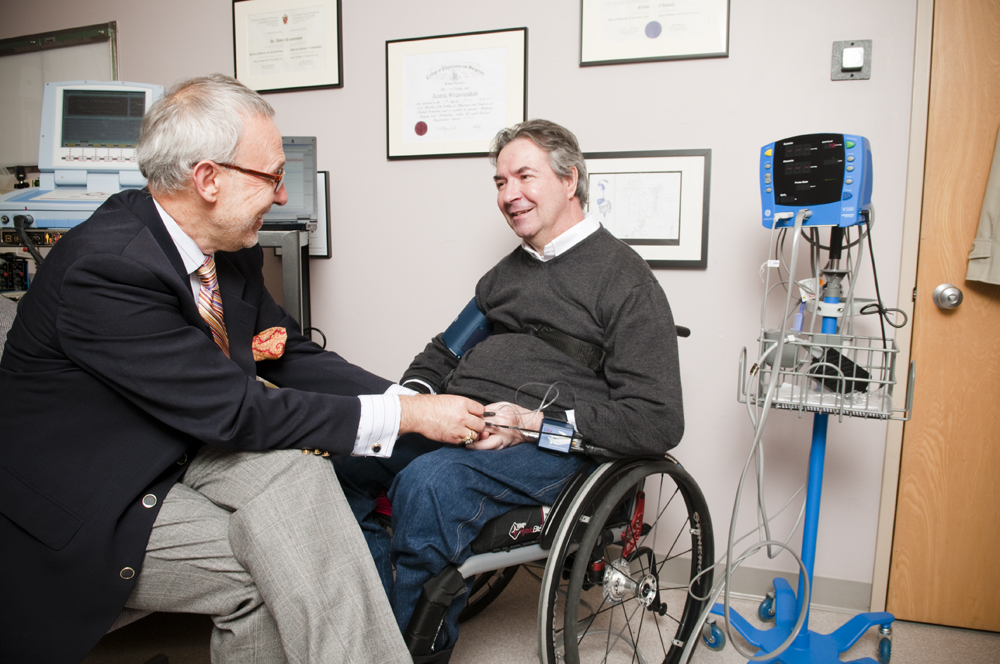
Understanding the experiences of persons affected by pressure injuries. A knowledge creation and consensus-building activity

Bridging the gap between discovery and practical application is a persistent challenge in research, especially when addressing complex health issues like pressure injuries. A new CIHR-funded study brings together persons affected by PI, caregivers, researchers, healthcare providers, and other stakeholders in a collaborative network. The goal is to build consensus around lived experiences, identify key challenges and prioritize strategies that can meaningfully improve prevention, management and overall health outcomes related to pressure injuries.


The team conducted 17 interviews and focus groups with people living with pressure injuries, this also included individuals with a spinal cord injury (SCI). Dr. Sharon Gabison, Principal Investigator of this study says, "there were challenges across the persona, interpersonal, organizational, and policy levels, including limited equipment access and inconsistent staffing, but also strong family support and proactive prevention practices. By surveying people with lived experience of pressure injuries and other health problems, we will be able to determine what the most urgent research and intervention priorities are."


Why It Matters


Pressure injuries can be life-threatening even for people with SCI. One example is Sepsis from pressure wounds, which continues to be a leading cause of death in Canada, despite hospital-acquired pressure injuries being labelled as "never events" in Canada.

“The conflict is clear: we know pressure injuries are deadly, yet as a system we haven’t ‘moved the needle’ in reducing them. This project aims to bridge that gap by highlighting what matters most to the people who live with and manage these injuries every day,” says Spring Hawes, Regional PLEX Engagement Liaison, Praxis. As part of this project, Spring contributed lived experience insights, helped design interview questions, and supported the development of the questionnaire.

More than just data, the project has fostered new networks of collaboration across Canada, patients, caregivers, clinicians, and researchers coming together. It has sparked conversations about why good practices aren’t universally adopted, where system breakdowns occur, and how communities can learn from what works well in certain regions.

As the next steps, the data from the survey will be reviewed by the group early next year defining consensus regarding pressure injury prevention and management. As a result, the team will shape the next phase of research, interventions, and policy advocacy.


click here to participate in the study


Praxis is pleased to support this project by bringing in the perspective of people living with spinal cord injuries, helping with knowledge translation, and committing to sharing findings more broadly.
Sander L. Hitzig, Kirstin E. Yuzwa , Linda Weichel, Eva Cohen, Luke Anderson, Peter Athanasopoulos, Krista L. Best, Marco Chow, Anita Kaiser, Franca Tomasella, Sara J. T. Guilcher, Vanessa K. Noonan, Richard Joy, Anika Abdullah, Farah Bacchus-Misir, Amy Chan, Marnie Courage, Nikoletta Erdelyi, Deborah Fletcher, Siobhan Galeazzi-Stirling, Gary Gladstone, Jenn Green, Monte Hardy, Evelyn Harris, Jeffrey Kerr, Judi Lytle, Kyla MacGinnis, Gary Malkowski, David Rosenbaum, Julie Sawchuk, Mikiko Terashima, Yu-Ling Yin, Sue VanDeVelde-Coke, Christine L. Sheppard

DOI: https://journals.plos.org/plosone/article?id=10.1371/journal.pone.0318458


Abstract


This article describes the development of priorities and actions to improve the state of research, policy, and practice related to accessible housing in Canada for persons with disability or with accessible housing needs. A modified Delphi approach with an expert cross-sectoral panel was used to gain convergence on a set of priorities for advancing the accessible housing field in Canada. This included circulating an anonymous pre-meeting survey (N = 49) followed by an in-person planning meeting (N = 45). The expert panel at the in-person meeting identified three clusters of priorities from an initial list of 21 priorities, which included: 1) engaging with all levels of government to support accessible housing efforts; 2) developing educational resources to raise awareness about accessible housing, and creating services to facilitate locating and acquiring accessible housing; and 3) fostering meaningful engagement across key interest groups and sectors to find solutions to enact positive change in this space. The findings provide an initial roadmap for bringing greater cohesion to the accessible housing field, which will enable cross-sectoral partnerships and collective action towards informing the next generation of accessible housing standards, regulations and practices for people with accessible housing needs.


Acknowledgments


The authors thank Dr Christiana L. Cheng for her scientific advice, critical review, and proofreading of the manuscript. We also thank the RHSCIR participants and network, including all the participating local RHSCIR sites: GF Strong Rehabilitation Centre, Vancouver General Hospital, Foothills Hospital, Glenrose We would like to thank Lorene Casiez from Human Space / BDP Quadrangle, Sarah McCarthy from the Rick Hansen Foundation, Brock Stevenson from the Daniels Corporation, Sean MacGinnis from BuildAble, and Rabia Munir from GWL Realty Advisors for their contributions to this initiative. The authors also would like to thank our staff and students from the St. John’s Rehab Research Program for their support, including Yomna Ahmed, Jorge Rios, Zoe Li, and Sarmitha Sivakumaran. Finally we would like to thank Jerry E. Mings from the Desk Consulting Group for his facilitation of the planning event.


Access Paper
Dionne, Antoine MD; Mac-Thiong, Jean-Marc MD, PhD; Hong, Heather A. PhD; Kurban, Dilnur MSc; Xu, Jijie MSc; Humphreys, Suzanne MSc; Bailey, Chris MD; Barthélemy, Dorothy PT, PhD; Christie, Sean MD; Fourney, Daryl MD; Linassi, Gary MD; Loyola-Sanchez, Adalberto MD, PhD; Paquet, Jérôme MD; Sreenivasan, Vidya MD; Townson, Andrea MD; Tsai, Eve MD, PhD; Noonan, Vanessa PT, PhD; Richard-Denis, Andréane MD, MSc; the RHSCIR Network

DOI: https://journals.lww.com/ajpmr/fulltext/2025/02000/is_the_level_of_consent_to_a_national_research.5.aspx


Abstract


Despite the growing recognition of housing as a significant concern for individuals with a spinal cord injury/dysfunction (SCI/D), there is limited research available on this topic. This scoping review aimed to idWe examined the impact of consenting to the Rick Hansen Spinal Cord Injury Registry on outcomes: acute length of stay, in-hospital mortality, medical complications (pressure injuries and pneumonia), and the final discharge destination following a spinal cord injury using the national Rick Hansen Spinal Cord Injury Registry dataset.

A retrospective cohort study was conducted using Rick Hansen Spinal Cord Injury Registry participant data from 2014 to 2019. Participants approached for enrollment were grouped into 1) PC: provided full consent including community follow-up interviews, 2) DWC: declined community follow-up interviews but accepted minimal data collection that may include initial/final interviews and/or those who later withdrew consent, and 3) DC: declined consent to any participation. As no data was collected for the DC group, descriptive, bivariate, and multivariable regression analysis was limited to the PC and DWC groups.

Of 2811 participants, 2101 (74.7%) were PC, 553 (19.7%) were DWC, and 157 (5.6%) were DC. DWC participants had significantly longer acute length of stay, more acute pneumonias/pressure injuries, and were less likely to be discharged home than PC participants. All these associations—except pneumonia—remained significant in the multivariable analyses.


Acknowledgments


The authors thank Dr Christiana L. Cheng for her scientific advice, critical review, and proofreading of the manuscript. We also thank the RHSCIR participants and network, including all the participating local RHSCIR sites: GF Strong Rehabilitation Centre, Vancouver General Hospital, Foothills Hospital, Glenrose Rehabilitation Hospital, Royal Alexandra Hospital, University of Alberta Hospital, Royal University Hospital, Saskatoon City Hospital, Winnipeg Health Sciences Centre, Toronto Western Hospital, Toronto Rehabilitation Institute, St. Michael’s Hospital, Sunnybrook Health Sciences Centre, Hamilton General Hospital, Hamilton Health Sciences Regional Rehabilitation Centre, Victoria Hospital (London), University Hospital (London), Parkwood Hospital (London), The Ottawa Hospital Rehabilitation Centre, The Ottawa Hospital Civic Campus, Hôpital de l’Enfant Jésus, Institut de Réadaptation en Deficience Physique de Quebec, Institut de Réadaptation Gingras-Lindsay-de-Montréal, Hôpital du Sacre Coeur de Montréal, Nova Scotia Rehabilitation Centre, QEII Health Sciences Centre, Saint John Regional Hospital, Stan Cassidy Centre for Rehabilitation, St. John’s Health Sciences Centre, and L.A. Miller Rehabilitation Centre.


Data for this research/project was collected using the Global Research Platform http://www.rhigrp.net/.


Neurology data for this research/project was cleaned using the Praxis International Standards for the Neurological Classification of Spinal Cord Injuries Algorithm http://www.isncscialgorithm.com/.


The authors thank the Alberta Trauma Services Team and the Alberta Trauma Registry in providing data for the RHSCIR.


Access Paper
Ramtin Hakimjavadi, Heather A.P. Mputu Mputu, M. Beauséjour, A. Richard-Denis, N. Fallah, V. K. Noonan, J. M. Mac-Thiong

DOI: https://www.tandfonline.com/doi/full/10.1080/09638288.2024.2320267


Purpose


Identify patient subgroups with different functional outcomes after SCI and study the association between functional status and initial ISNCSCI components.

Methods


Using CART, we performed an observational cohort study on data from 675 patients enrolled in the Rick-Hansen Registry(RHSCIR) between 2014 and 2019. The outcome was the Spinal Cord Independence Measure (SCIM) and predictors included AIS, NLI, UEMS, LEMS, pinprick(PPSS), and light touch(LTSS) scores. A temporal validation was performed on data from 62 patients treated between 2020 and 2021 in one of the RHSCIR participating centers.

Results


The final CART resulted in four subgroups with increasing totSCIM according to PPSS, LEMS, and UEMS: 1)PPSS < 27(totSCIM = 28.4 ± 16.3); 2)PPSS ≥ 27, LEMS < 1.5, UEMS < 45(totSCIM = 39.5 ± 19.0); 3)PPSS ≥ 27, LEMS < 1.5, UEMS ≥ 45(totSCIM = 57.4 ± 13.8); 4)PPSS ≥ 27, LEMS ≥ 1.5(totSCIM = 66.3 ± 21.7). The validation model performed similarly to the original model. The adjusted R-squared and F-test were respectively 0.556 and 62.2(P-value <0.001) in the development cohort and, 0.520 and 31.9(P-value <0.001) in the validation cohort.

Conclusion


Acknowledging the presence of four characteristic subgroups of patients with distinct phenotypes of functional recovery based on PPSS, LEMS, and UEMS could be used by clinicians early after tSCI to plan rehabilitation and establish realistic goals. An improved sensory function could be key for potentiating motor gains, as a PPSS ≥ 27 was a predictor of a good function.

Access Paper
Sarmitha Sivakumaran, Tsione Kebede, Kirstin E. Yuzwa, Ella C. N. Wong, Christine L. Sheppard, Sara J. T. Guilcher, Peter Athanasopoulos, Krista L. Best, Anita Kaiser, Vanessa K. Noonan, Sander L. Hitzig

DOI: https://www.mdpi.com/2227-9032/12/24/2537


Abstract


Despite the growing recognition of housing as a significant concern for individuals with a spinal cord injury/dysfunction (SCI/D), there is limited research available on this topic. This scoping review aimed to identify and describe the literature on housing across the continuum for people with an SCI/D. Methods: This review utilized Arksey and O’Malley’s scoping review framework. Five databases were searched including MEDLINE (Ovid), Embase (Ovid), CINAHL Plus (EBSCO), PsycINFO (Ovid), and Web of Science (Core Collection). In addition, Google’s Advanced Search function was used to search the gray literature, and reference lists from the included studies were scanned. A preliminary assessment of the Theory of Access (TOA) constructs and their relationships was conducted using Penchansky and Thomas’ Theory of Access and Saurman’s additional updates. An adapted version of this theory was developed by the research team to identify the types of studies that assess the TOA’s six constructs and was used to identify knowledge gaps to advance research in this field. Results: The search yielded 25,861 records, with 36 studies meeting the inclusion criteria. Data analysis revealed the participants’ sociodemographic and impairment characteristics, as well as essential information pertaining to housing across the continuum for individuals with an SCI/D, both of which were inconsistently reported across the studies. Several studies (n = 18) reported on the influence of home adaptations on the health and well-being of individuals with an SCI/D. When framed within the TOA, issues of accessibility presented the most substantial barriers for the SCI/D community, followed by acceptability and availability. Conclusions: The findings of this scoping review suggest that housing is an understudied topic and that further research is required to generate evidence to better support the housing needs of individuals with an SCI/D globally.


Acknowledgments


The authors would like to acknowledge the support of Erica Nekolaichuk, a librarian at the University of Toronto, for their assistance in developing the scoping review search strategy.

Access Paper
James A. G. Crispo, Lisa J. W. Liu, Vanessa K. Noonan, Nancy P. Thorogood, Brian K. Kwon, Marcel F. Dvorak, Dylan Thibaul, Allison W. Willis, Jacquelyn J. Cragg

DOI: https://www.frontiersin.org/journals/neurology/articles/10.3389/fneur.2023.1264589/full


Introduction


Traumatic spinal cord injury (tSCI) is a debilitating neurological condition resulting in lifelong disability for many individuals. The primary objectives of our study were to describe national trends in incident emergency department (ED) visits for tSCI among children (less than 21 years) in the United States, and to determine the proportion of visits that resulted in immediate hospitalization each year, including stratified by age and sex. Secondary objectives were to examine associations between select characteristics and hospitalization following tSCI, as well as to assess sports-related tSCIs over time, including by individual sport and geographic region.

Method


We used the Healthcare Cost and Utilization Project Nationwide Emergency Department Sample to identify ED visits among children between January 2016 and December 2020 for incident tSCI. Diagnosis codes were used to identify tSCI and sports-related injury etiologies. Census Bureau data were used to approximate annual rates of pediatric ED visits for tSCI per 100,000 children. Unconditional logistic regression modeling assessed whether select factors were associated with hospital admission.

Results


We found that the annual ED visit rate for tSCI remained relatively stable between 2016 and 2020, with approximately 2,200 new all-cause pediatric ED visits for tSCI annually. Roughly 70% of ED visits for tSCI resulted in hospitalization; most ED visits for tSCI were by older children (15–20 years) and males, who were also more often admitted to the hospital. Notable secondary findings included: (a) compared with older children (15–20 years), younger children (10–14 years) were less likely to be hospitalized immediately following an ED visit for tSCI; (b) patient sex and race were not associated with hospital admission; and (c) American tackle football was the leading cause of sports-related ED visits for tSCI among children. Our findings also suggest that the proportion of sports-related tSCI ED visits may have increased in recent years.

Funding


The author(s) declare financial support was received for the research, authorship, and/or publication of this article. This work was funded by the Blusson Integrated Cures Partnership, a collaboration between ICORD and the Praxis Spinal Cord Institute. JCri was supported by a trainee award from Michael Smith Health Research BC. JCra was a Tier 2 Canada Research Chair and Michael Smith Health Research BC Scholar.

Access Paper
Nader Fallah, Vanessa K. Noonan, Zeina Waheed, Raphaele Charest-Morin, Charlotte Dandurand, Christiana Cheng, Tamir Ailon, Nicolas Dea, Scott Paquette, John T. Street, Charles Fisher, Marcel F. Dvorak, Brian K. Kwon
DOI: https://www.frontiersin.org/journals/neurology/articles/10.3389/fneur.2023.1278826/full


Introduction


Following a traumatic spinal cord injury (SCI) it is critical to document the level and severity of injury. Neurological recovery occurs dynamically after injury and a baseline neurological exam offers a snapshot of the patient’s impairment at that time. Understanding when this exam occurs in the recovery process is crucial for discussing prognosis and acute clinical trial enrollment. The objectives of this study were to: (1) describe the trajectory of motor recovery in persons with acute cervical SCI in the first 14 days post-injury; and (2) evaluate if the timing of the baseline neurological assessment in the first 14 days impacts the amount of motor recovery observed.

Method


Data were obtained from the Rick Hansen Spinal Cord Injury Registry (RHSCIR) site in Vancouver and additional neurological data was extracted from medical charts. Participants with a cervical injury (C1–T1) who had a minimum of three exams (including a baseline and discharge exam) were included. Data on the upper-extremity motor score (UEMS), total motor score (TMS) and American Spinal Injury Association (ASIA) Impairment Scale (AIS) were included. A linear mixed-effect model with additional variables (AIS, level of injury, UEMS, time, time2, and TMS) was used to explore the pattern and amount of motor recovery over time.

Results


Trajectories of motor recovery in the first 14 days post-injury showed significant improvements in both TMS and UEMS for participants with AIS B, C, and D injuries, but was not different for high (C1–4) vs. low (C5–T1) cervical injuries or AIS A injuries. The timing of the baseline neurological examination significantly impacted the amount of motor recovery in participants with AIS B, C, and D injuries.

Funding


The author(s) declare financial support was received for the research, authorship, and/or publication of this article. The Rick Hansen Spinal Cord Injury Registry and this work are supported by funding from the Praxis Spinal Cord Institute, Health Canada, Western Economic Diversification Canada and Government of BC. BK is the Canada Research Chair in Spinal Cord Injury and holds the Dvorak Chair in Spine Trauma.

Access Paper
Ramtin Hakimjavadi, Heather A. Hong, Nader Fallah, Suzanne Humphreys, Stephen Kingwell, Alexandra Stratton, Eve Tsai, Eugene K. Wai, Kristen Walden, Vanessa K. Noonan, Philippe Phan

DOI: https://www.frontiersin.org/journals/neurology/articles/10.3389/fneur.2023.1201025/full


Introduction


Several clinical prediction rules (CPRs) have been published, but few are easily accessible or convenient for clinicians to use in practice. We aimed to develop, implement, and describe the process of building a web-based CPR for predicting independent walking 1-year after a traumatic spinal cord injury (TSCI).

Method


Using the published and validated CPR, a front-end web application called “Ambulation” was built using HyperText Markup Language (HTML), Cascading Style Sheets (CSS), and JavaScript. A survey was created using QualtricsXM Software to gather insights on the application’s usability and user experience. Website activity was monitored using Google Analytics. Ambulation was developed with a core team of seven clinicians and researchers. To refine the app’s content, website design, and utility, 20 professionals from different disciplines, including persons with lived experience, were consulted.

Results


After 11 revisions, Ambulation was uploaded onto a unique web domain and launched (www.ambulation.ca) as a pilot with 30 clinicians (surgeons, physiatrists, and physiotherapists). The website consists of five web pages: Home, Calculation, Team, Contact, and Privacy Policy. Responses from the user survey (n = 6) were positive and provided insight into the usability of the tool and its clinical utility (e.g., helpful in discharge planning and rehabilitation), and the overall face validity of the CPR. Since its public release on February 7, 2022, to February 28, 2023, Ambulation had 594 total users, 565 (95.1%) new users, 26 (4.4%) returning users, 363 (61.1%) engaged sessions (i.e., the number of sessions that lasted 10 seconds/longer, had one/more conversion events e.g., performing the calculation, or two/more page or screen views), and the majority of the users originating from the United States (39.9%) and Canada (38.2%).

Discussion


Ambulation is a CPR for predicting independent walking 1-year after TSCI and it can assist frontline clinicians with clinical decision-making (e.g., time to surgery or rehabilitation plan), patient education and goal setting soon after injury. This tool is an example of adapting a validated CPR for independent walking into an easily accessible and usable web-based tool for use in clinical practice. This study may help inform how other CPRs can be adopted into clinical practice.

Access Paper
Kenedy Olsen, Kathleen A. Martin Ginis, Sarah Lawrason, Christopher B. McBride, Kristen Walden, Catherine Le Cornu Levett, Regina Colistro, Tova Plashkes, Andrea Bass, Teri Thorson, Ryan Clarkson, Rod Bitz, Jasmin K. Ma

DOI: https://www.frontiersin.org/journals/neurology/articles/10.3389/fneur.2023.1201025/full


Introduction


Physical Activity (PA) levels for individuals with spinal cord injury (SCI) peak during rehabilitation and sharply decline post-discharge. The ProACTIVE SCI intervention has previously demonstrated very large-sized effects on PA; however, it has not been adapted for use at this critically understudied timepoint. The objective is to evaluate the reach, effectiveness, adoption, implementation, and maintenance of the ProACTIVE SCI intervention delivered by physiotherapists and SCI peer coaches during the transition from rehabilitation to community.

Method


A single-group, within-subjects, repeated measures design was employed. The implementation intervention consisted of PA counseling training, champion support, prompts and cues, and follow-up training/community of practice sessions. Physiotherapists conducted counseling sessions in hospital, then referred patients to SCI peer coaches to continue counseling for 1-year post-discharge in the community. The RE-AIM Framework was used to guide intervention evaluation.

Results


Reach: 82.3% of patients at the rehabilitation hospital were reached by the intervention. Effectiveness: Interventionists (physiotherapists and SCI peer coaches) perceived that PA counseling was beneficial for patients. Adoption: 100% of eligible interventionists attended at least one training session. Implementation: Interventionists demonstrated high fidelity to the intervention. Intervention strategy highlights included a feasible physiotherapist to SCI peer coach referral process, flexibility in timepoint for intervening, and time efficiency. Maintenance: Ongoing training, PA counseling tracking forms, and the ability to refer to SCI peer coaches at discharge are core components needed to sustain this intervention.

Discussion


The ProACTIVE SCI intervention was successfully adapted for use by physiotherapists and SCI peer coaches during the transition from rehabilitation to community. Findings are important for informing intervention sustainability and scale-up.

Access Paper